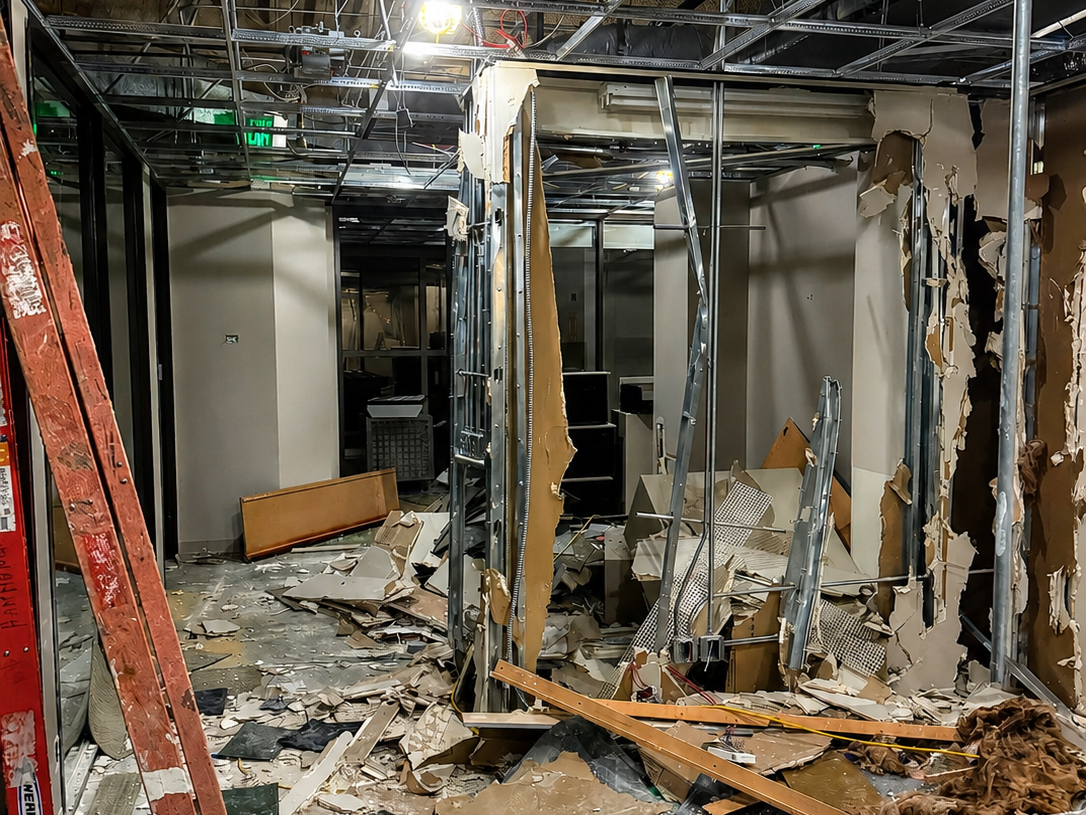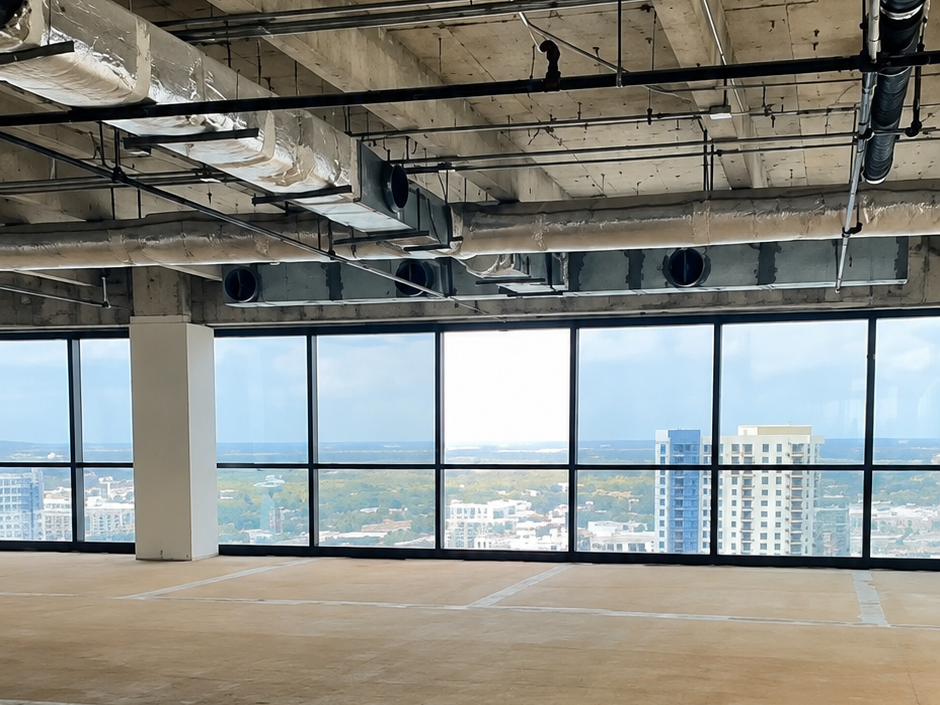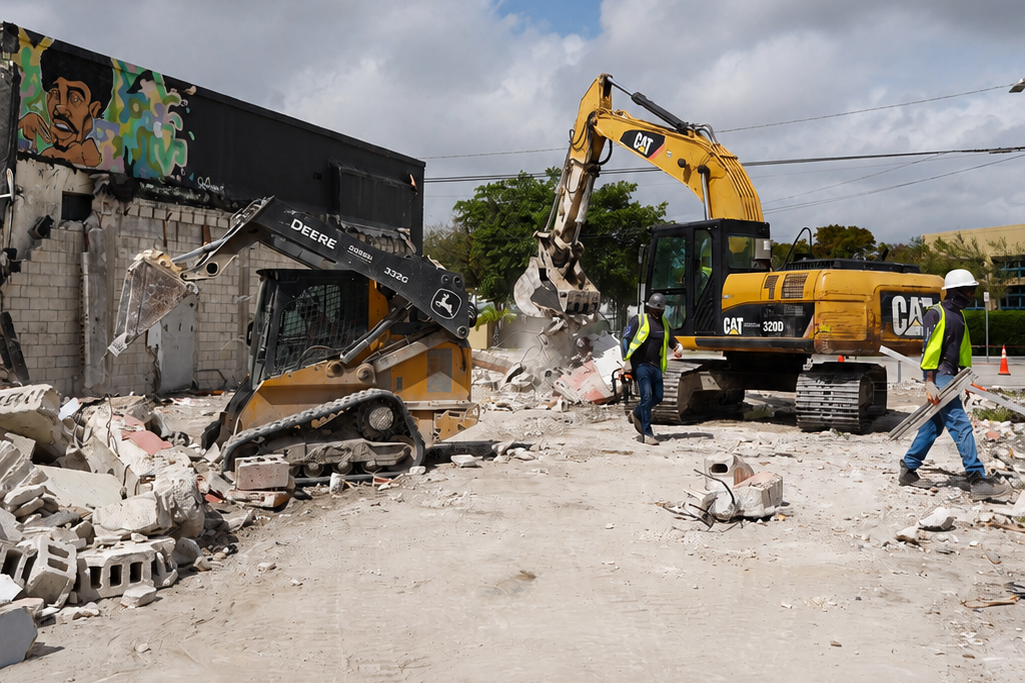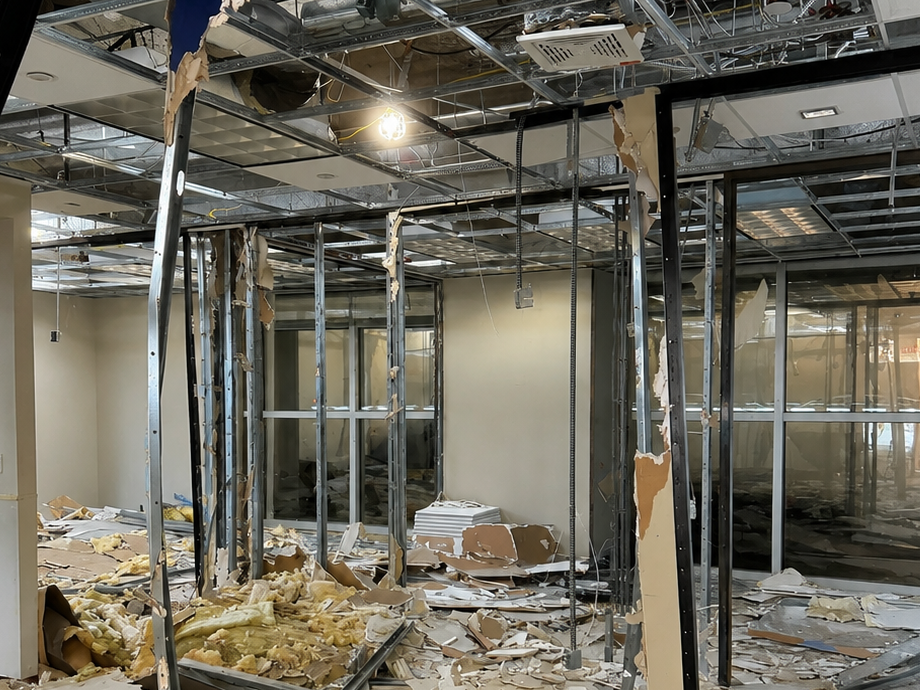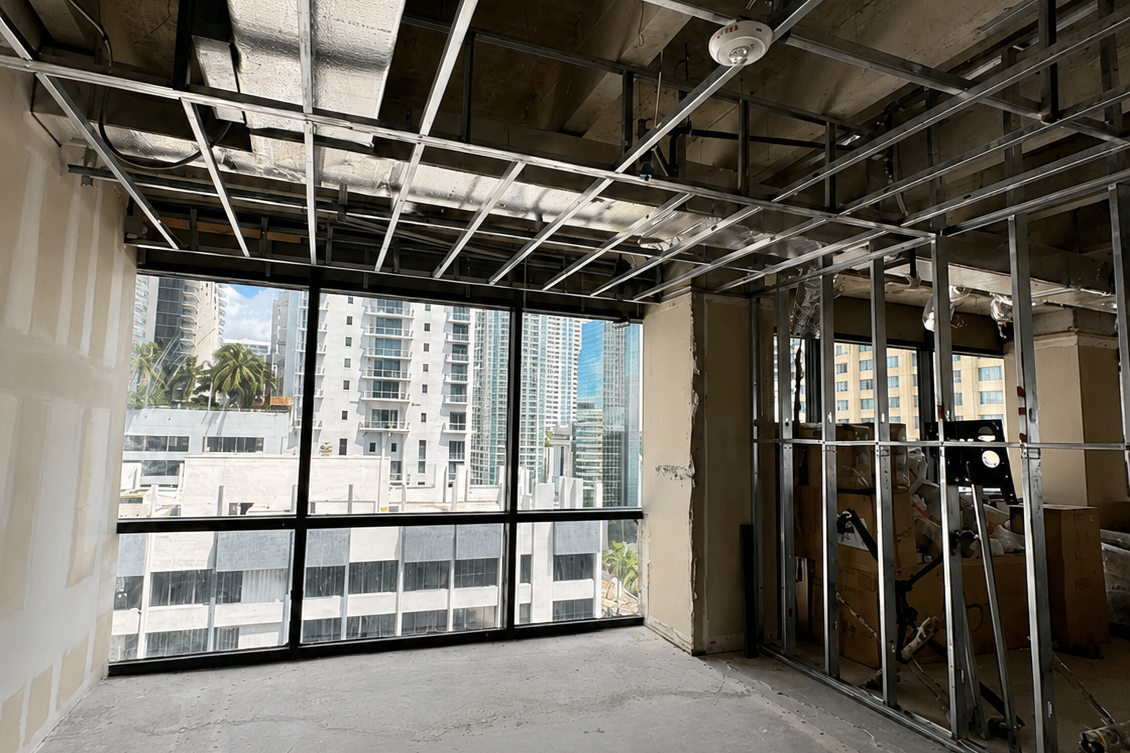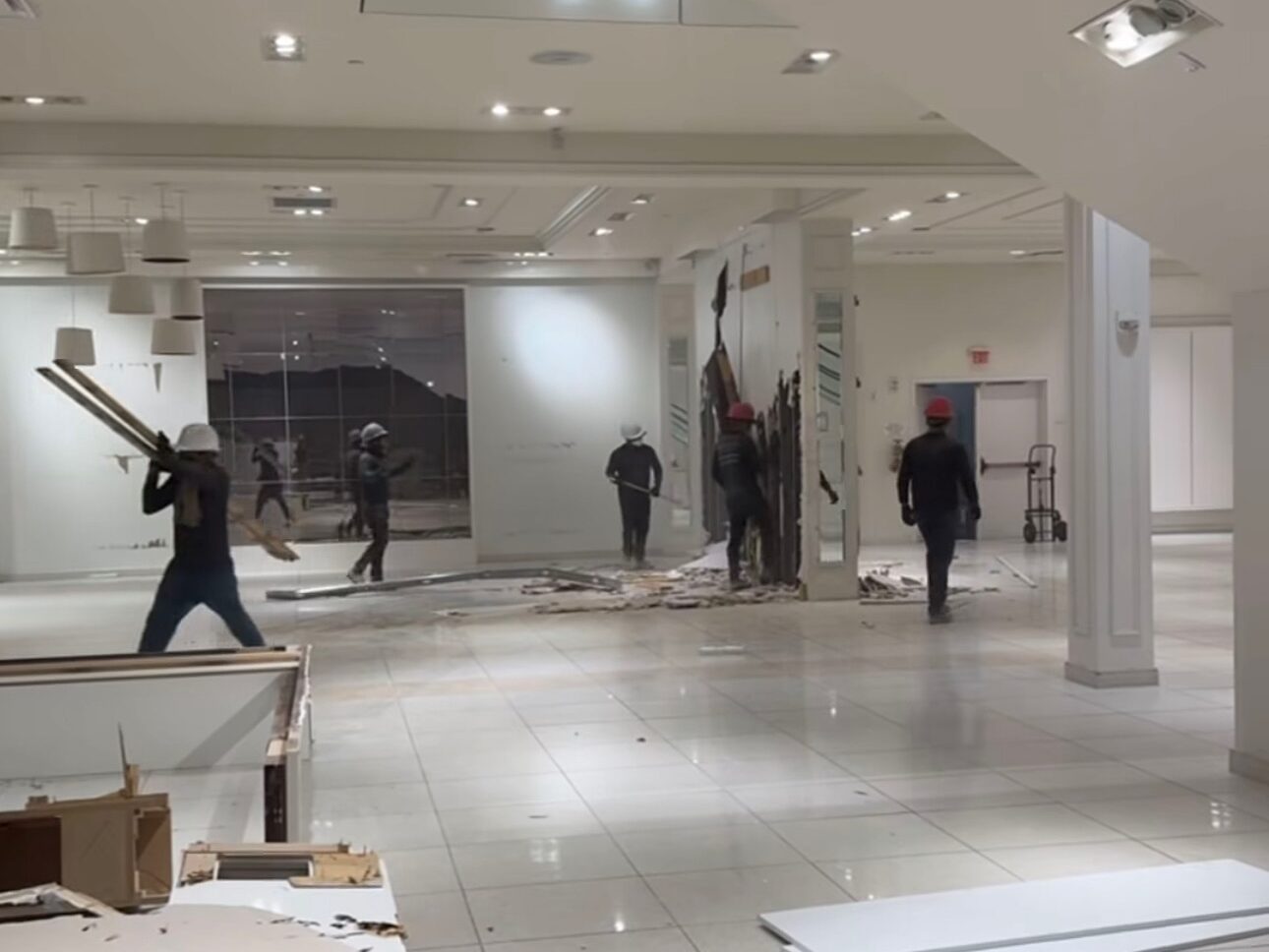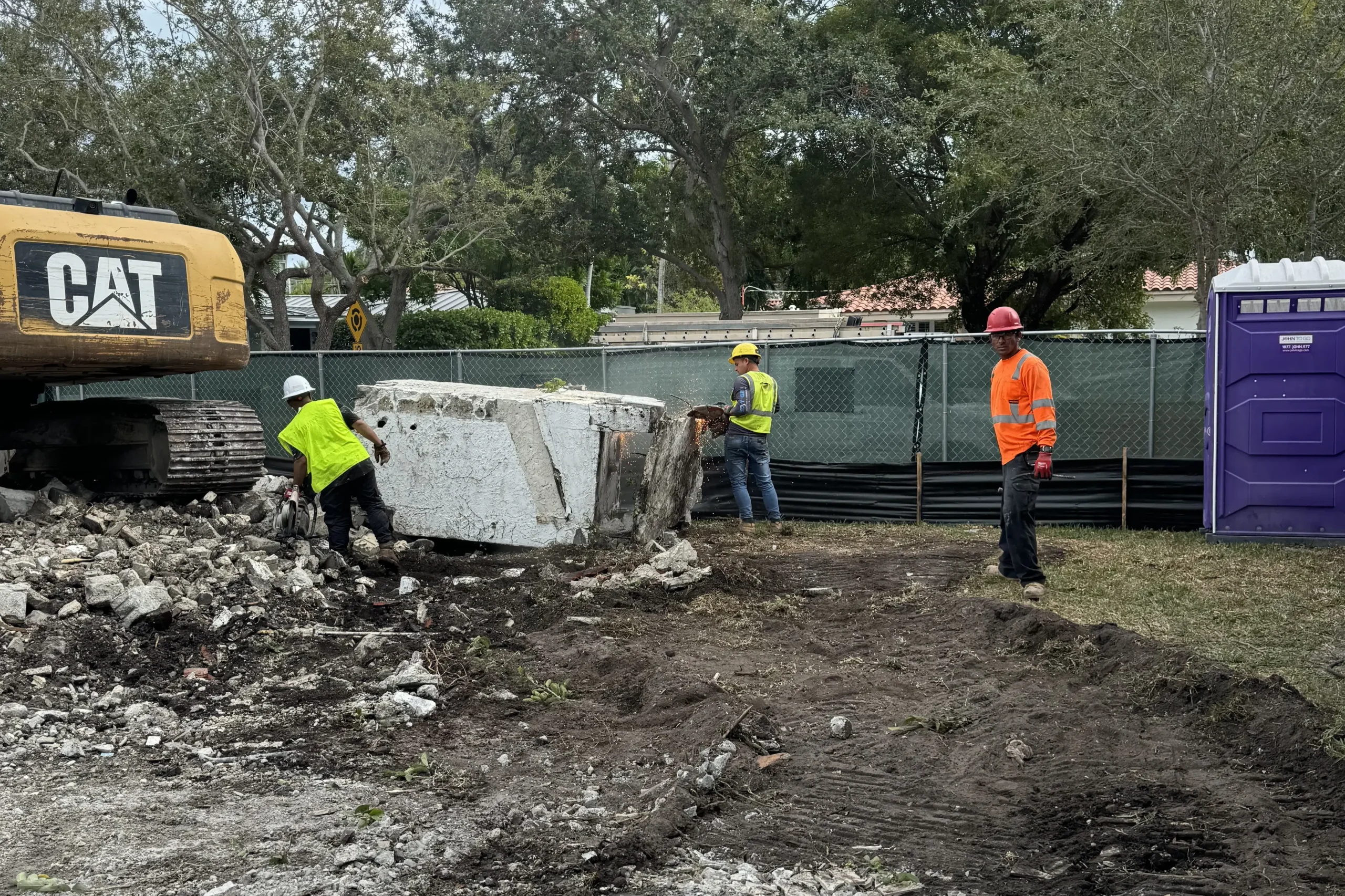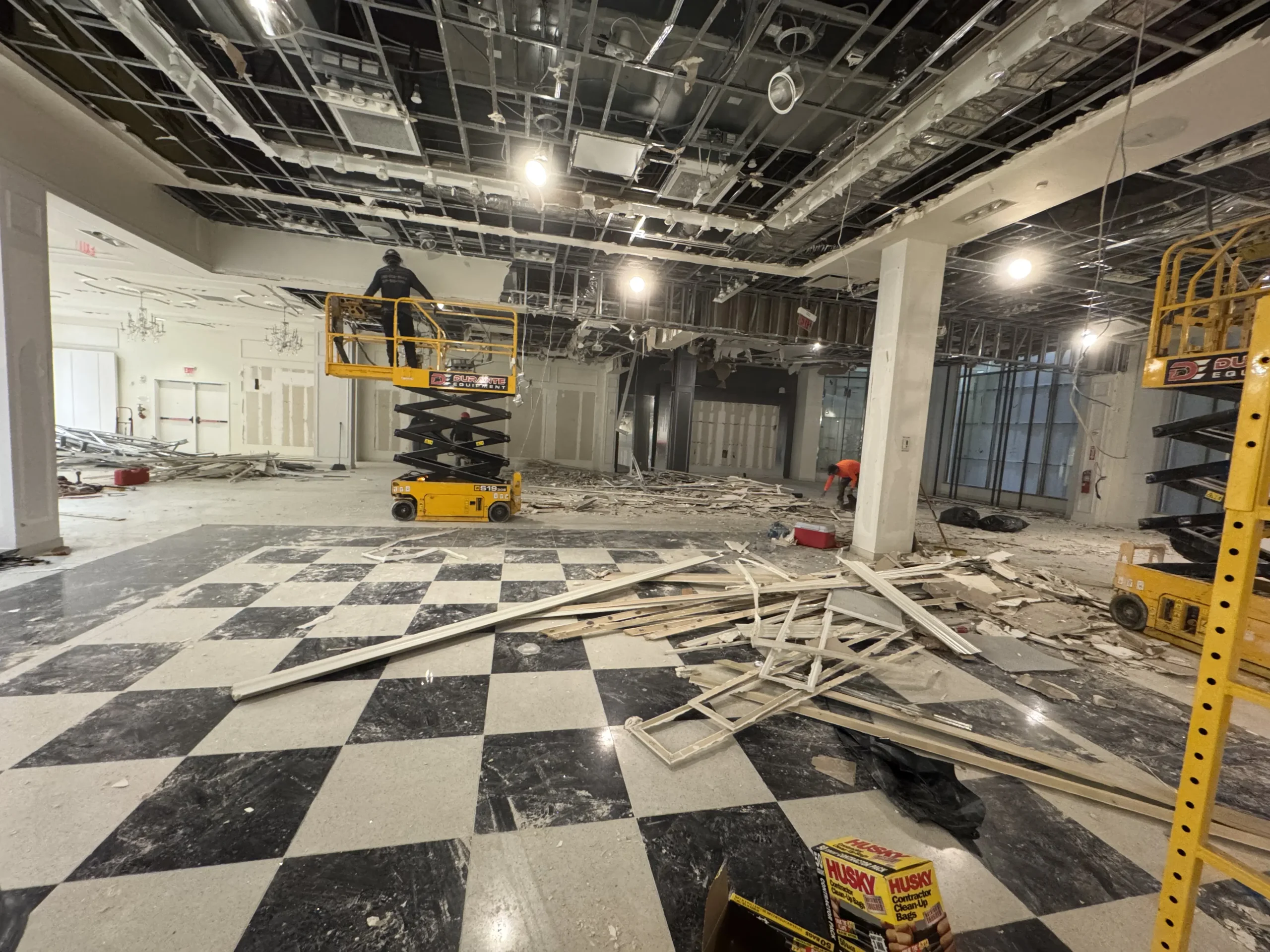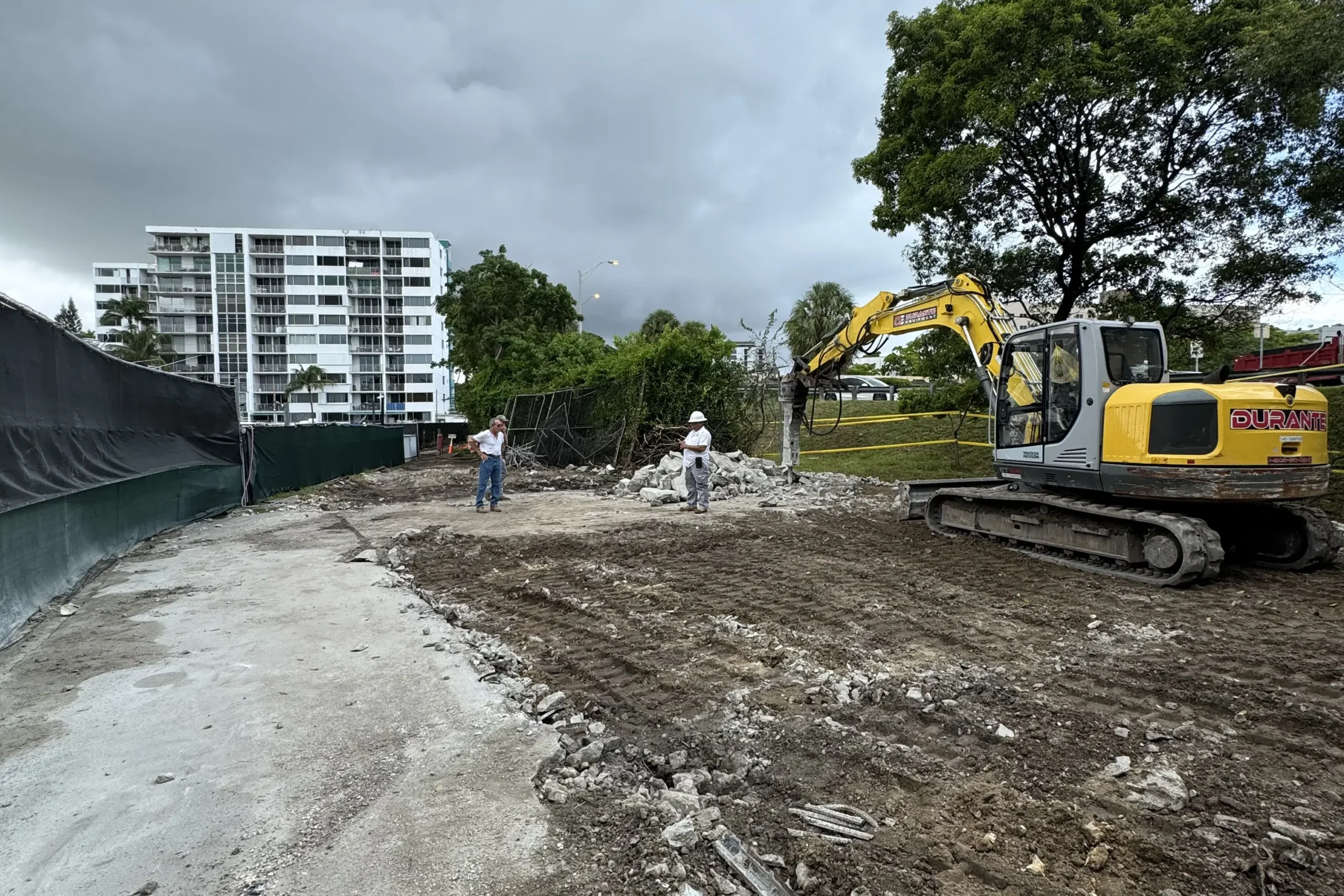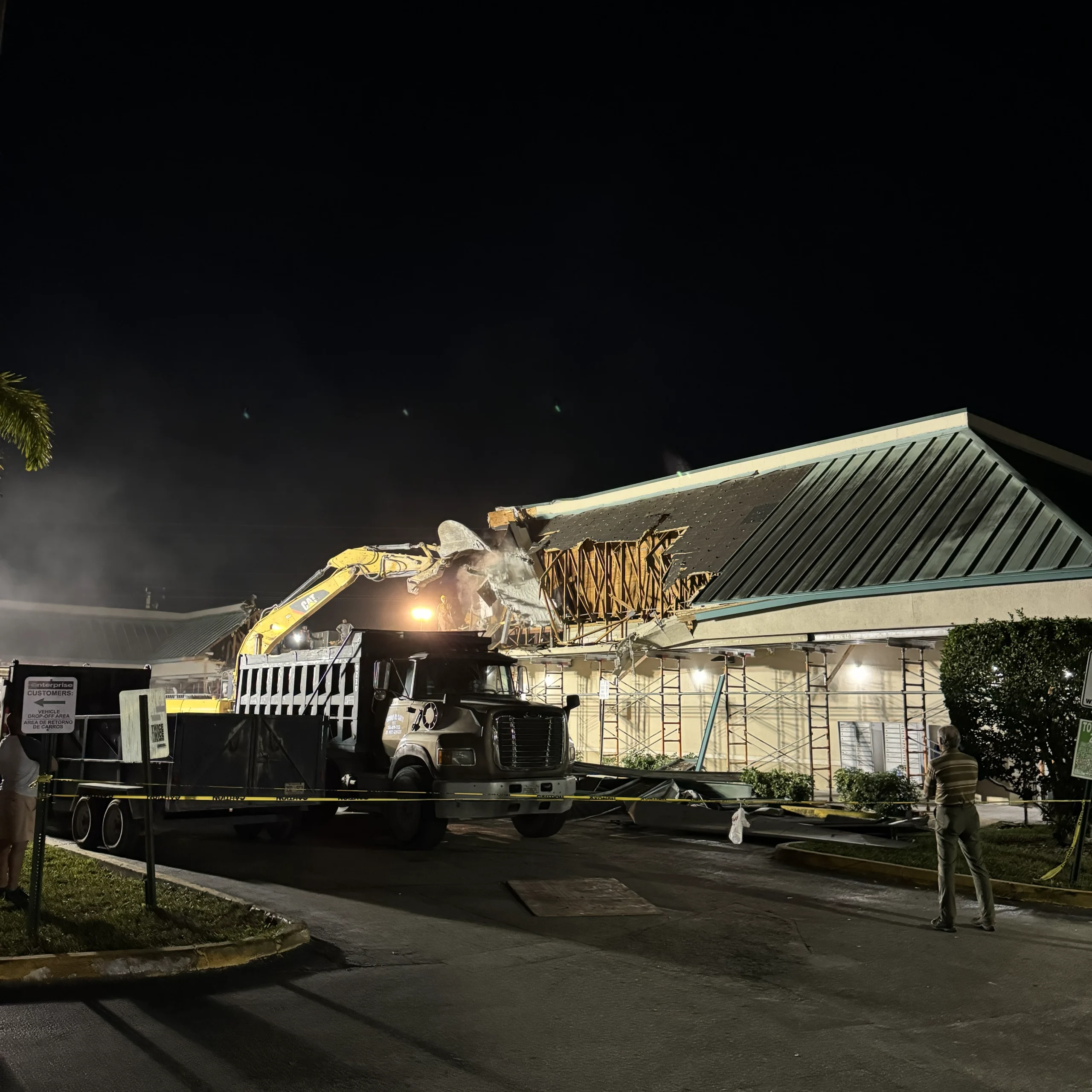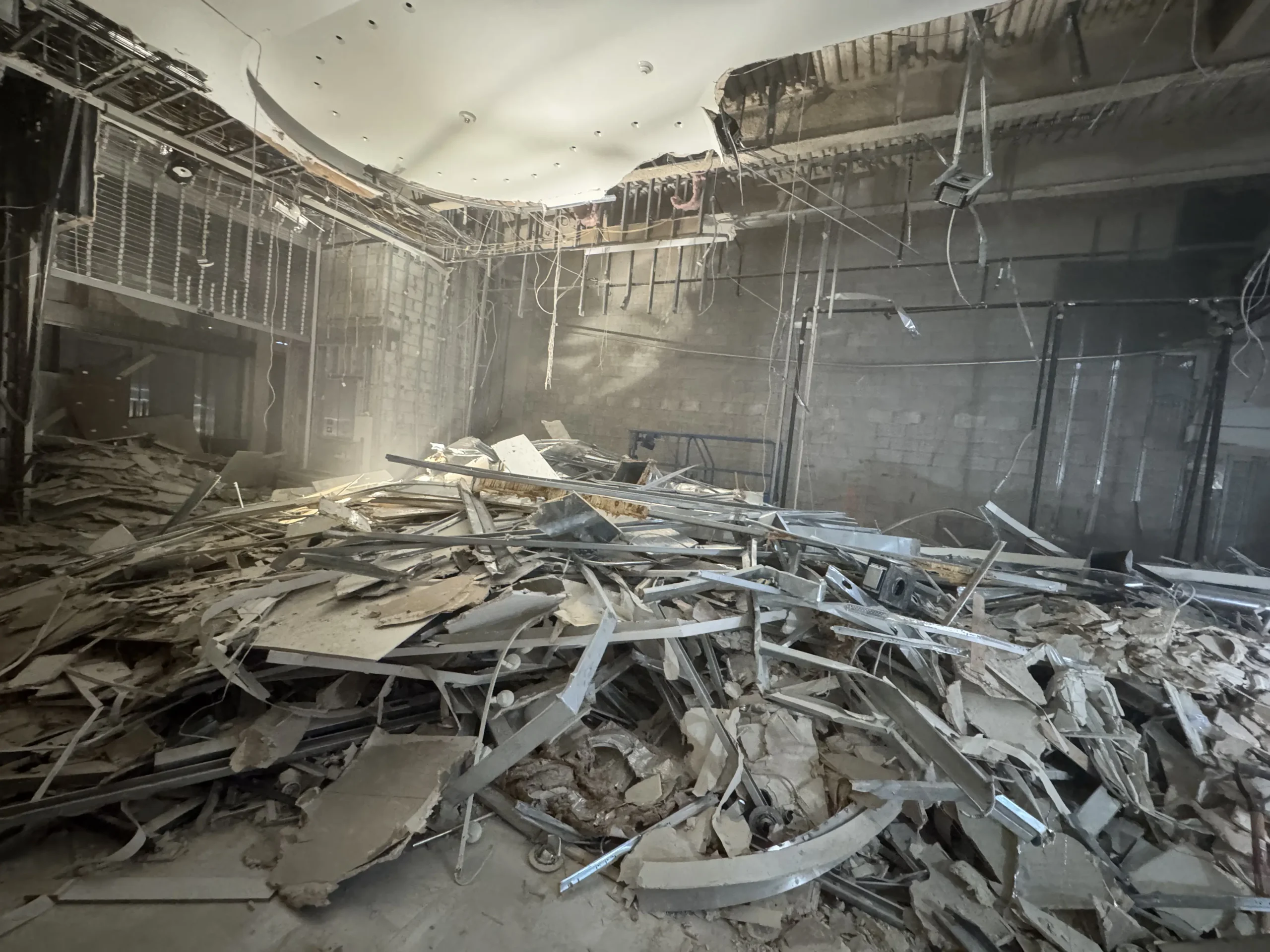
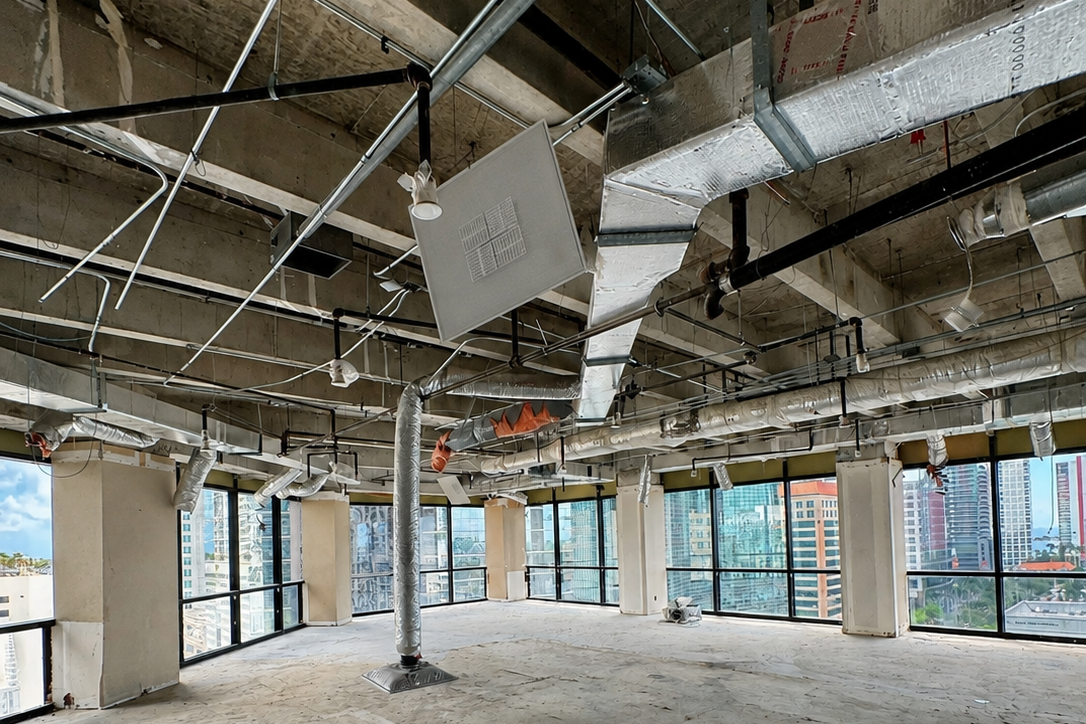
When people hear the word demolition, they often picture an entire building being torn down. In commercial construction, however, demolition is frequently much more precise.
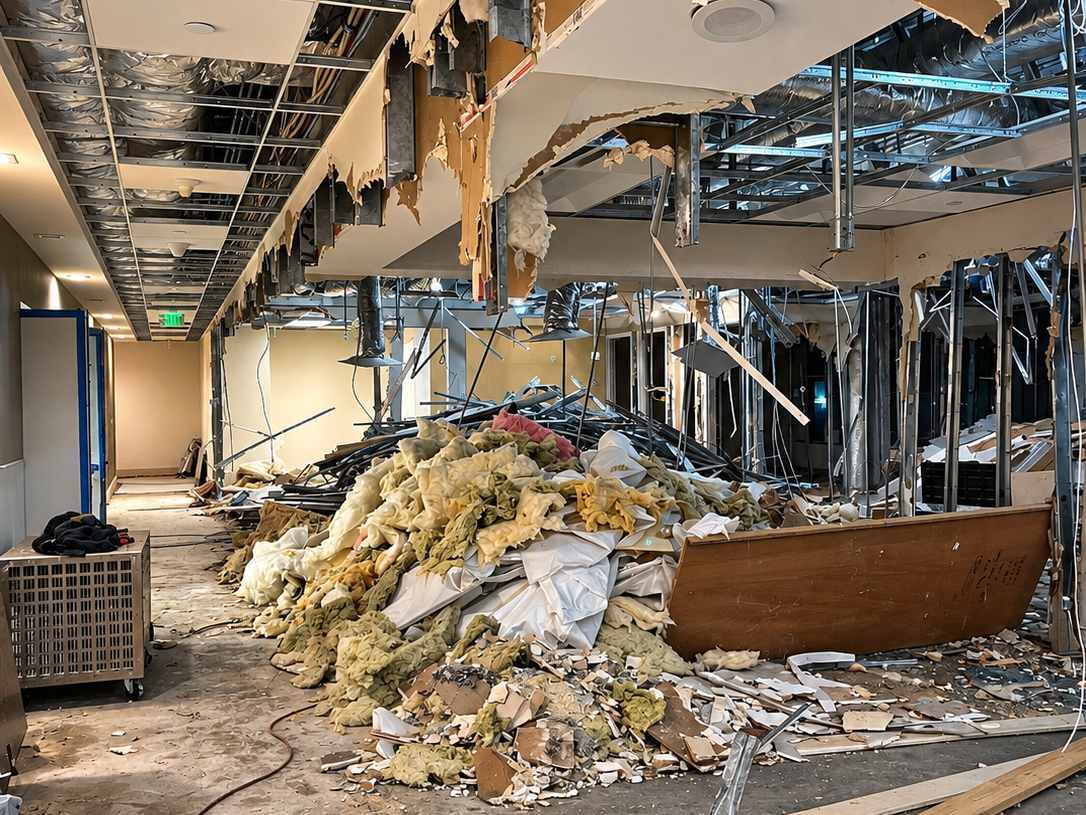
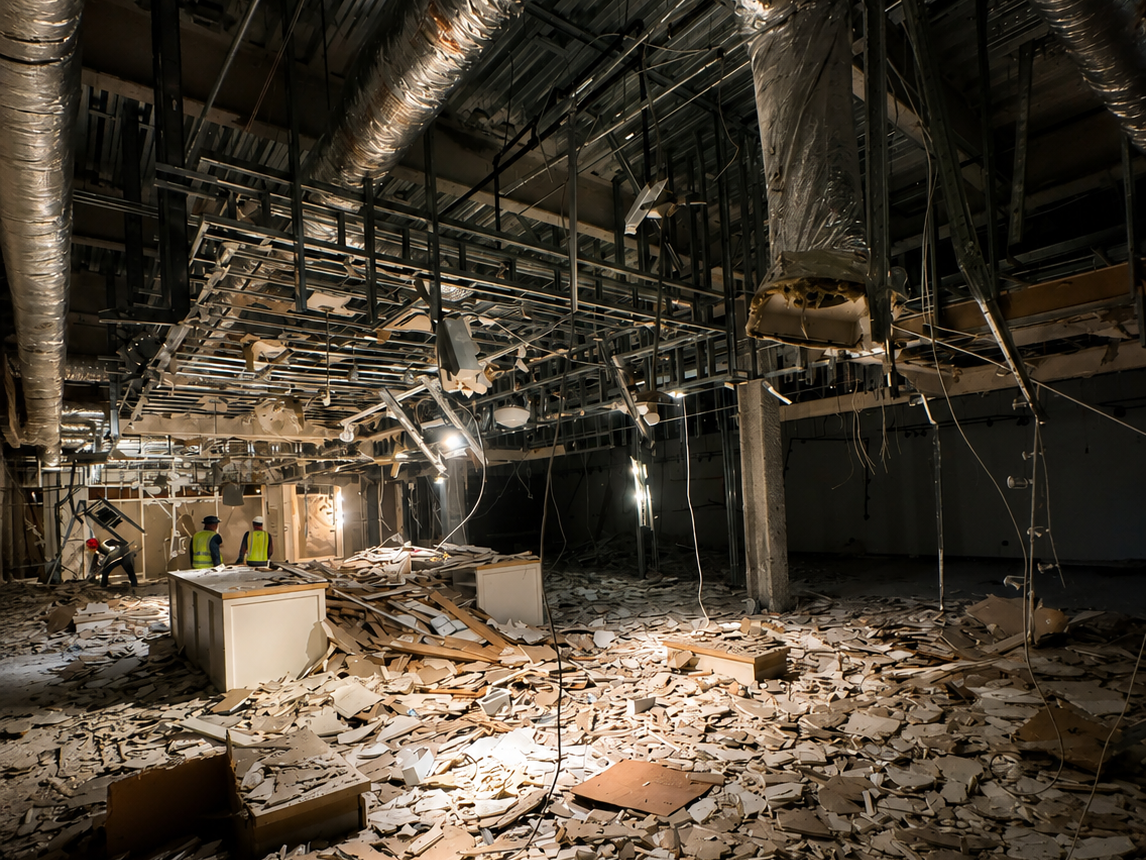
Selective demolition involves carefully removing specific parts of an existing building while preserving the areas, materials, or structural components that will remain. Instead of clearing an entire property, contractors work within a defined scope to prepare the space for renovation, remodeling, or a new tenant buildout.
From retail stores and restaurants to offices, healthcare facilities, hotels, and shopping centers, selective demolition plays an important role in transforming existing commercial spaces throughout South Florida.
What Is Selective Demolition?
Selective demolition is the controlled removal of designated building components without demolishing the entire structure.
The goal is simple: remove what is no longer needed while protecting what will remain.
Depending on the project, selective demolition may involve removing:
- Interior walls and partitions
- Ceilings and ceiling systems
- Flooring and finishes
- Doors and frames
- Millwork and cabinetry
- Plumbing fixtures
- Electrical fixtures and devices
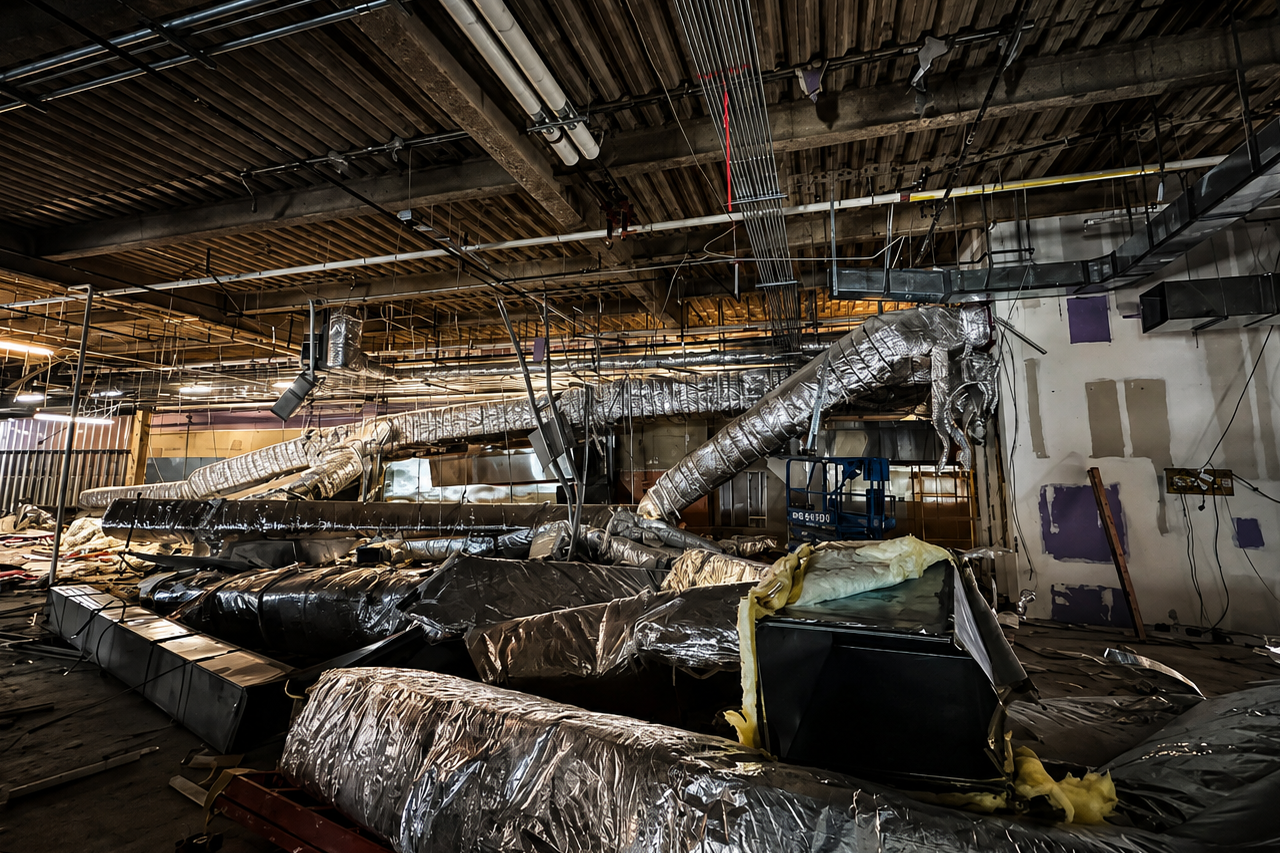
- HVAC components and ductwork
- Storefront components
- Concrete or masonry
- Existing equipment
- Specific structural or architectural elements
The exact demolition scope is determined by the project plans, specifications, existing site conditions, and the requirements of the new construction.
This makes selective demolition very different from complete building demolition. Precision matters because crews are often working immediately beside areas that must remain intact.
Selective Demolition vs. Complete Demolition
Although both fall under demolition services, selective demolition and complete demolition serve very different purposes.
Complete demolition generally involves removing an entire structure to clear a property for redevelopment or new construction.
Selective demolition focuses only on specific portions of a building.
For example, imagine a restaurant closes and a new tenant plans to convert the space into a retail store. The building itself may be in excellent condition, but the existing kitchen, partitions, ceilings, flooring, plumbing fixtures, and finishes may no longer work for the new layout.
Instead of demolishing the entire building, selective demolition allows those components to be removed while the parts of the property needed for the new buildout remain.
This approach is common throughout commercial construction because buildings frequently change tenants, layouts, and uses long before the structures themselves reach the end of their useful lives.
Where Is Selective Demolition Commonly Used?
Selective demolition can be found across nearly every sector of commercial construction.
Retail and Shopping Centers
Retail spaces regularly change tenants and layouts. Selective demolition may be used to remove previous tenant improvements, fitting rooms, flooring, storefront components, ceilings, displays, or interior partitions before a new store is constructed.
In active shopping centers, the work may also take place alongside neighboring businesses that remain open.
Offices
Office renovations often require existing spaces to be reconfigured for new layouts. Private offices may become open workspaces, conference rooms may be relocated, or entire suites may be redesigned for new tenants.
Selective demolition allows contractors to remove the elements affected by the new design while preserving portions of the existing space.
Restaurants
Restaurant renovations can involve significant interior demolition because of specialized kitchens, bars, plumbing, mechanical systems, flooring, millwork, and equipment.
When a restaurant changes concepts or a space receives a completely different tenant, selective demolition helps prepare the property for its next use.
Health Care Facilities
Hospitals, medical offices, clinics, and other healthcare facilities often renovate individual departments or areas rather than replacing an entire building.
These projects can require carefully planned selective demolition around spaces and building systems that remain operational.
Hotels and hospitality
Hotels frequently renovate rooms, corridors, restaurants, lobbies, amenity spaces, and back-of-house areas in phases.
Selective demolition makes it possible to target specific renovation areas while preserving other portions of the property.
How Do Contractors Know What Gets Demolished?
On larger commercial projects, demolition is typically defined through construction drawings and specifications.
Architectural plans may include dedicated demolition sheets identifying which walls, doors, ceilings, finishes, fixtures, and other components should be removed.
Other disciplines may provide their own demolition drawings as well. Mechanical, electrical, plumbing, and fire protection plans can identify existing systems or equipment that need to be removed, relocated, or modified for the new construction.
This is why reviewing the complete project documentation is important.
A wall shown for removal on an architectural demolition plan, for example, could contain electrical devices, plumbing, or other systems addressed elsewhere in the drawings.
Contractors also use site walks to compare the drawings with actual field conditions and identify anything that may require additional clarification before work begins.
What Does “Existing to Remain” Mean?
One of the most important concepts in selective demolition is understanding what doesn’t get demolished.
Commercial construction drawings frequently identify components as existing to remain.
These could include walls, doors, structural elements, flooring, equipment, utilities, storefronts, elevators, or other parts of the building that will be incorporated into the renovated space.
Those components may be located directly beside demolition work.
For demolition crews, the scope therefore involves more than removing material. It also requires recognizing and protecting the surrounding conditions that are intended to stay.
This distinction is a major reason selective demolition requires a controlled approach.
Selective Demolition in Occupied Buildings
Not every commercial renovation happens inside an empty building.
Selective demolition frequently occurs in properties where other areas continue operating during construction. This is especially common in shopping centers, office buildings, healthcare facilities, hotels, airports, and other large commercial properties.
Depending on the project, demolition may need to be performed in phases or during designated working hours.
Temporary barriers, controlled access areas, debris routes, floor and wall protection, and coordination with building management may all become part of the demolition plan.
In these environments, the objective is not simply to remove the designated materials. The work must also remain contained within the renovation area and minimize unnecessary impact on the surrounding property.
What Happens to the Space After Selective Demolition?
Selective demolition is often one of the first visible stages of a commercial renovation.
Once the designated existing materials have been removed, the space begins transitioning from its previous use to its new configuration.
The demolition phase may expose areas needed by electricians, plumbers, mechanical contractors, framers, and other trades. New walls can be constructed, utilities can be rerouted, finishes can be installed, and the new commercial buildout can begin taking shape.
In that sense, selective demolition isn’t simply about taking a space apart.
It’s about preparing an existing building for what comes next.
Selective Demolition in South Florida
South Florida’s commercial properties are constantly evolving.
Across Miami-Dade, Broward, and Palm Beach Counties, retail spaces change tenants, restaurants introduce new concepts, offices are redesigned, healthcare facilities expand, and commercial properties are repositioned for new uses.
Many of these projects do not require complete building demolition. Instead, they require carefully removing portions of an existing space so it can be transformed while preserving the elements that still have value.
At Next Gen Construction & Demolition, we provide selective and commercial interior demolition services for renovation and redevelopment projects throughout South Florida. Our team works with general contractors and project teams across retail, healthcare, office, hospitality, shopping center, and other commercial environments.
Every renovation starts with an existing space. Selective demolition helps create the transition between what that space was and what it is going to become.
Have an upcoming commercial renovation project? Contact Next Gen Construction & Demolition or send our estimating team your project plans to discuss the demolition scope and request pricing.